

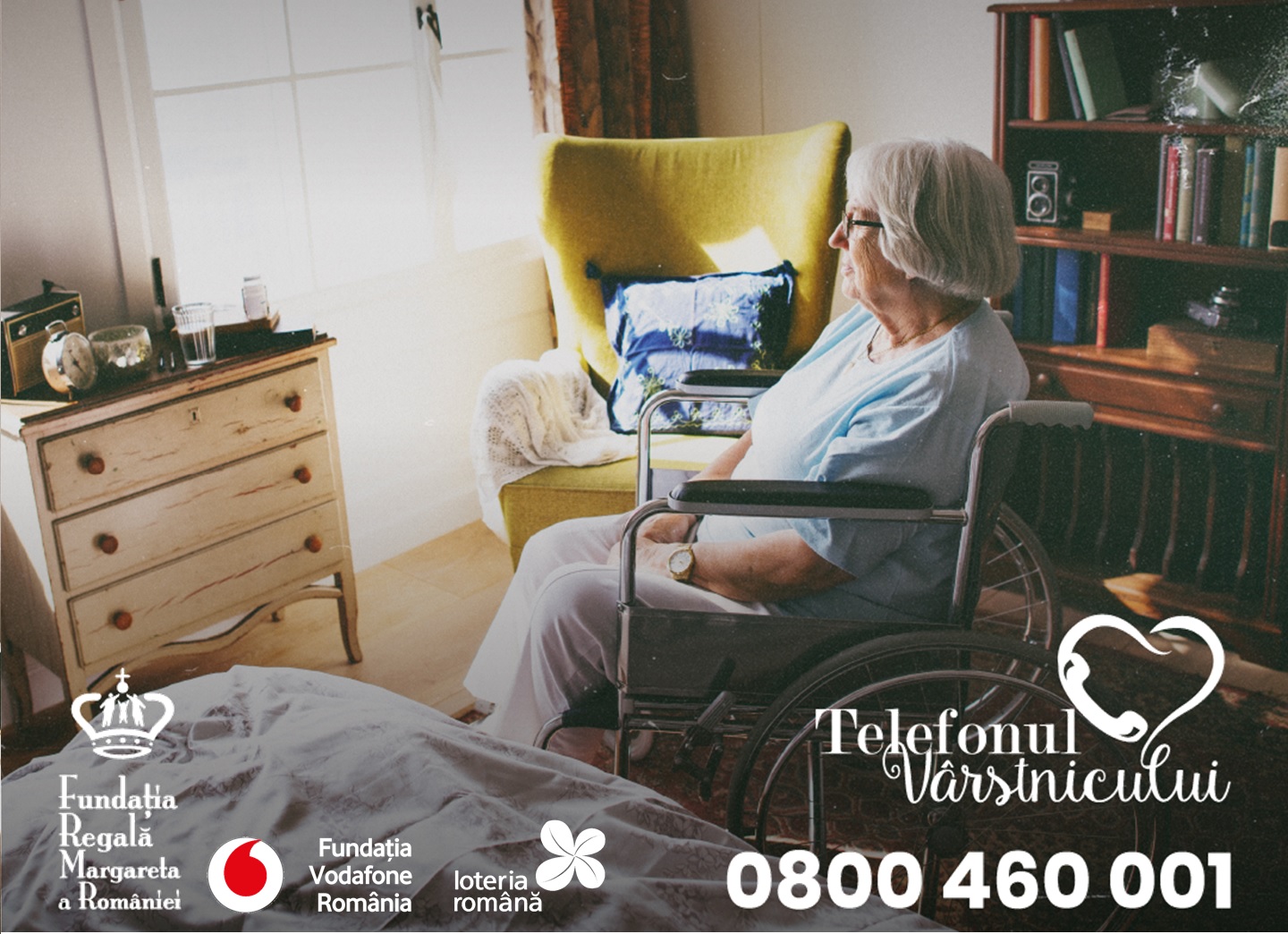

- The number of seniors requesting support at the Elderly Helpline in 2020 almost tripled compared to the previous year.
- Requests for information and financial aid were the main reasons why seniors called the support line.
The Elderly Helpline social service, the only free and confidential telephone line dedicated to seniors in Romania, recorded the highest number of requests and unique callers in 2020 since its establishment five years ago. Specifically, last year saw 16,673 telephone conversations with 3,424 seniors who benefited from counseling, guidance, information, and, importantly, material or emotional support.
Through the Elderly Helpline, seniors found solutions to the existential problems they faced in 2020. At the top of the needs expressed by seniors last year was the need for useful information, which is not accessible to everyone due to either isolation or a lack of skills in using new communication technologies. 1,078 seniors requested information and relevant contacts for their individual situations, provided by the helpline's specialized team of social workers.
The increase in the poverty rate among the elderly, especially in the context of the pandemic, also led to a rise in the number of those calling for financial and material support. In 2020, 1,066 such requests were recorded from seniors. The Elderly Helpline team directed these cases toward community social assistance services operated by General Directorates of Social Assistance (DGAS) or NGOs to receive personalized and consistent help. Together with partners and sponsors, The Margareta of Romania Royal Foundation resolved a portion of these requests, supporting seniors facing precarious living conditions.
The third most common need among seniors in 2020 was the need for care and practical support at home. For 668 of the callers, the team provided information regarding available medical assistance or specialized supervision services, as well as references for senior homes and institutionalization procedures.
Due to the social isolation imposed by the new socio-sanitary conditions, feelings of loneliness, anxiety, or depression experienced by a large number of seniors deepened. This was one of the reasons seniors called the line seeking emotional support. As a solution to this need, the Elderly Helpline—through social workers and volunteer psychologists—offered psychological counseling and emotional support to those enrolled in the weekly call-back service or redirected seniors to NGOs with specialized services in the callers' communities.
A sense of uselessness overwhelms many seniors who leave the social stage upon retirement. For those expressing a need to be active and for social participation, the Elderly Helpline proposes community volunteering actions and participation in activities organized in senior clubs. For 95 seniors, interaction and socialization remain possible because programs such as the Generations Community Center, the Bucharest Municipality Senior Center, and the Never Alone Association adapted their activities to the online environment.
The Elderly Helpline is the only free and confidential telephone line dedicated to elderly people, accessible nationwide. Seniors receive specific, practical, and updated information and find solutions to various problems they face. Calls can be made to 0800 460 001, Monday to Friday between 08:00–20:00, and Saturday between 08:00–16:00. In December, 352 seniors called the Elderly Helpline, totaling 1,578 conversations.
The Elderly Helpline is a social project funded by the Vodafone Romania Foundation, C.N. Loteria Română, and S.C. Johnson Wax.

