The Elderly Helpline – The needs of elderly people in Romania in the first half of 2025

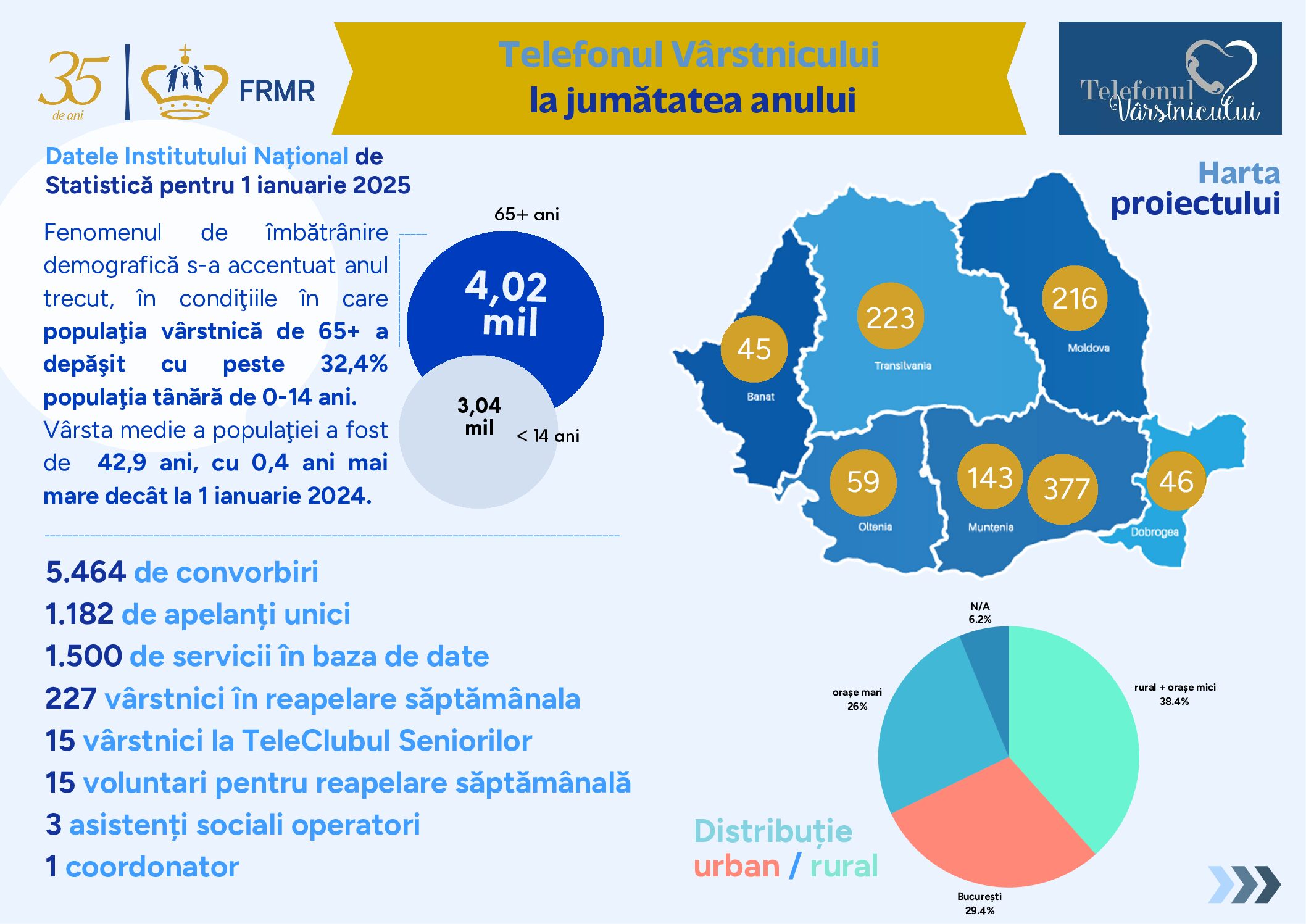
**Bucharest, 10 July 2025 | In the first six months of this year, the free social helpline The Elderly Helpline – 0800 460 001, operated since 2015 by The Margareta Of Romania Royal Foundation, recorded 5,464 calls from across the country. Of these, 1,182 callers – elderly people and relatives – called for the first time, and 54% of elderly people stated that they live alone.**
The service remains a benchmark for people aged over 65 in Romania, providing information, social counselling, support, and guidance for various needs – ranging from recommendations for social services to emotional support or community activities.
What are the needs of elderly people who call?
Unul dintre aspectele notabile ale acestei perioade este modificarea topului nevoilor exprimate de seniori. Dacă în anii anteriori cele mai multe apeluri vizau cererea de informații utile și de încredere sau sprijinul practic la domiciliu, în prima jumătate a anului 2025 a urcat semnificativ în top dorința de implicare în viața comunității și de participare la activități specifice vârstei a treia. Categoria Viață activă și participare socială a ajuns pe locul al doilea, cu 330 de apeluri, devansând solicitările pentru îngrijire și suport în funcție de gradul de dependență, dar și sprijin material sau financiar.
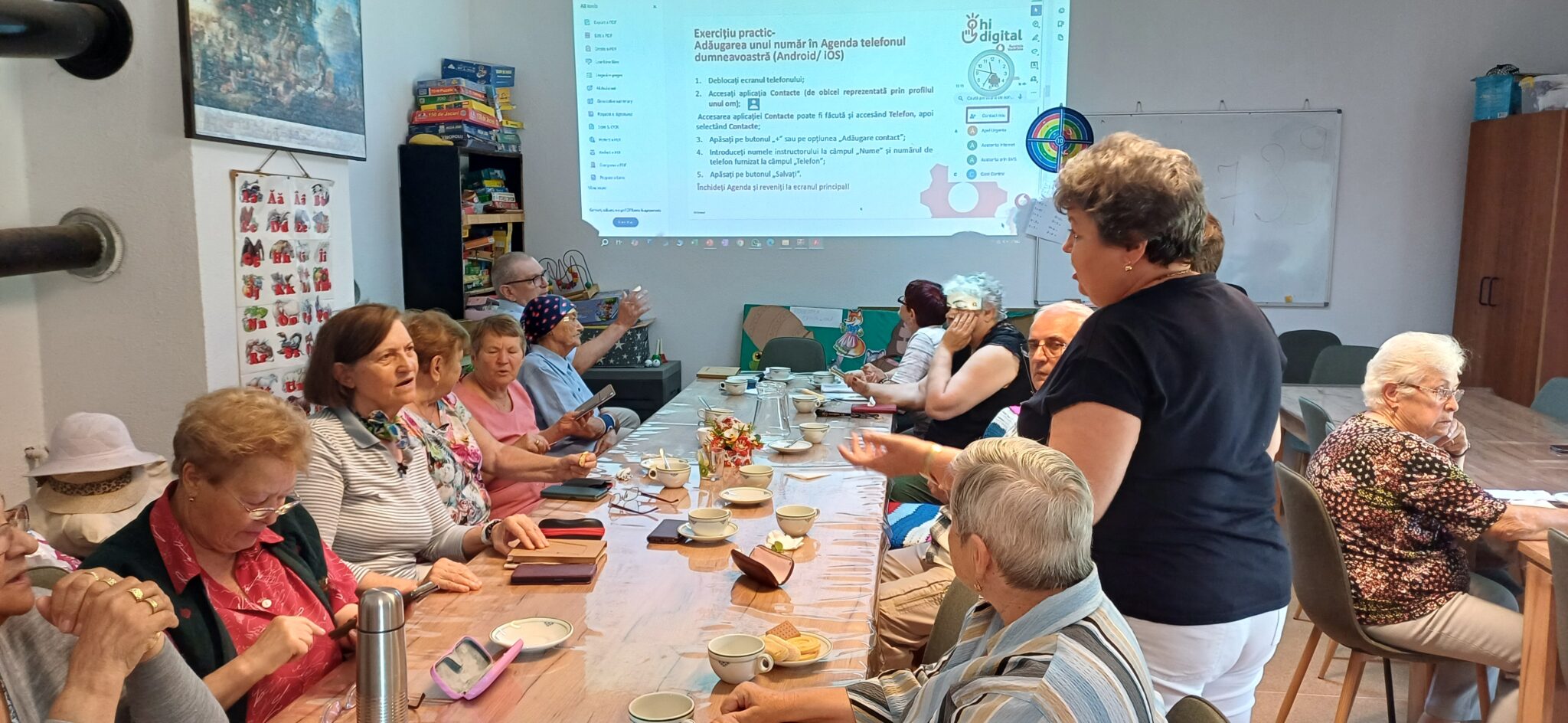
This change is also due to the fact that last year The Margareta Of Romania Royal Foundation launched, and continues in 2025, together with the Vodafone Foundation, the project Connecting Generations in the Digital World, dedicated to digital education for elderly people. In this context, 265 elderly people contacted The Elderly Helpline for the first time in the first half of the year in order to enroll in the digital skills workshops. Therefore, all callers who wish to lead an active life received information about the opportunities for participation in digital education workshops for seniors organized in Bucharest and in 15 other localities across the country, about opportunities for volunteering in the community, such as the Generations Centres, or about activities organized in community senior clubs or at the Senior TeleClub.
“I am grateful, you truly saved me. I didn’t think such clubs existed in our city as well. You know how it is, instead of staying at home within four walls, it’s better to go somewhere to exchange a few words with someone, to learn new things, or to go on trips together with other people my age.” – says Mrs. P, aged 68, with joy in her voice, who called out of the desire to leave the house and meet people of her own age.
Furthermore, The Elderly Helpline continues to remain a space of support and trust for the elderly people who call. The need to obtain practical, useful, and reliable information remains in first place. Relevant contacts and updated information for specific situations were provided to 367 elderly people by the social workers of the helpline. They operate with a database containing approximately 1,500 public institutions, social services, or private providers offering services specifically for seniors, continuously updated.
The need for care and support in relation to the level of dependency has reached third place among the main reasons for calling. 258 of the unique callers received information about the specialized services available, referrals to residential homes for elderly people and institutionalization procedures and resources available in the community, as well as recommendations regarding institutions that provide home medical care.
Fourth place among the main reasons for calls from elderly people was represented by requests for financial or material support, from 115 of the elderly people who called The Elderly Helpline for the first time. The team recommended appropriate community resources tailored to their individual needs, operated by the General Directorates of Social Assistance (DGAS) or NGOs, which can provide food products, hygiene and sanitary items, or social vouchers.
The need for emotional support ranks fifth among the main reasons for calling. For 53 elderly people who struggle with loneliness and personal challenges, The Elderly Helpline responded through its own weekly follow-up call services or by referring them to partner organizations providing specialized services in their community. Up to this point in the year, 227 elderly people have benefited from emotional support through weekly supportive calls.
Who are the elderly people who call The Elderly Helpline?
54% live alone, a percentage that reflects a national trend: 1 in 3 elderly people in Romania lives in isolation. Other categories include elderly people who live with their partners (29%), with other persons (9%), or in extended households, together with children or grandchildren (8%).
Women represent 58% of the callers, and the distribution by age categories shows that most elderly people who call are in the 70–80 age range (38%), followed by those aged 65–70 (19%) and those aged 80–90 (17%). Additionally, 11% of the calls came from relatives, who requested indirect support for elderly people.
A service with national impact, delivered with empathy
The Elderly Helpline has national coverage: most callers come from Bucharest and Ilfov (377 calls), followed by elderly people from Transylvania (223 calls) and Moldova (216 calls). The challenges faced by elderly people are felt more acutely in rural areas and small towns, from where 454 calls were received, compared to 348 from Bucharest.
The Elderly Helpline team consists of 3 social worker operators and one (1) coordinator, as well as 15 volunteers involved in the weekly follow-up call service. Elderly people from across the country who need information, social counselling, and relief from loneliness can call free of charge at the number 0800 460 001, Monday to Friday between 08:00 – 20:00 and Saturday between 08:00 – 16:00.
Each call is an opportunity for an elderly person to reconnect with the world. Each elderly person is treated with empathy and professionalism, being offered not only information, but also comfort.
The Elderly Helpline is a social project supported by Imedica SA, the Romanian National Lottery Company, Johnson Wax, Yardi Romania, and Kaufland Romania.
With media support: Pro TV, TVR, Antena 1, Antena 3 CNN, Antena Stars, Prima TV, Prima News, Pro Cinema, Pro Arena, Acasă, Acasă Gold, Zu TV, Happy Channel, Trinitas TV, Speranța TV, Antena 3 Deva, Campus TV Buzău, City TV Tg Mureș, Exploris TV, Moldova TV, Zenith Media (Digi 24, Digi Sport, Euronews, Favorit TV, Hit Music, Music Channel, N24 Plus, National TV, Romania TV, U TV etc & stații radio locale Viva, Radio Transilvania, Fresh, Eveniment / Sweet FM), Radio România Actualități, Radio România Antena Satelor, Radio România Regional, Radio Trinitas, Radio Arad, Radio Boom România, Radio Campus Buzău, Radio Renașterea, AGERPRES, Forbes Romania, Forbes Life, Nine O’Clock, Ziarul News, Ziarul Lumina, Europa Liberă România, România Pozitivă, Gala Societății Civile, România Responsabilă, Stiri.ong, Nonguvernamental.org, Jurnal de Sustenabilitate, Farmacia Tei, Formula AS, Asul Verde, Crai Nou, Suceava News, Glasul Văilor, Viața Buzăului, Obiectiv Ialomița, Ghidul Banatului, Vocea Dâmboviței, Ziarul Clujean, Răsunetul etc
With support from: The Bucharest-Ilfov Association of Family Physicians, the National Society of Family Medicine